
H.E. Alisher Abdykadyrov - CEO, Alatau City, Kazakhstan
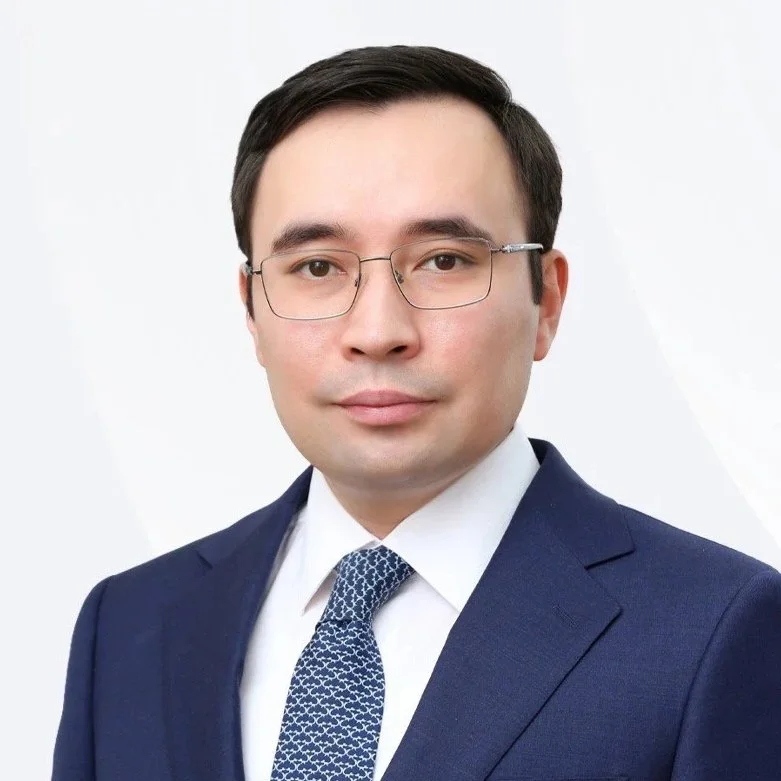
Alisher Abdykadyrov is a Kazakhstani politician and minister, currently serving as CEO of Alatau City Authority. He holds a Master of Economics degree from Lomonosov Moscow State University and was awarded the medal "Eren Enbegi Ushin" (For Diligent Labour) in 2017.
He began his career in 2009 as an Expert in the Investment Projects Department of the Ministry of Industry and Trade of Kazakhstan. He subsequently served as Chief Expert and Head of the Investment Projects Department before becoming Deputy Director of the Strategic Planning Department at the Ministry of Industry and New Technologies.
From 2014 to 2015, he served as Deputy Chairman of the Investment Committee under the Ministry for Investments and Development. He then headed the Department of Industrial and Innovative Development of the Pavlodar region from 2015 to 2016.
In 2019, he became Chairman of the Board of QazIndustry, followed by serving as Deputy Akim of the Karaganda region (2020–2021) and Vice Minister of the National Economy (2021–2022). He was subsequently appointed Deputy Akim of Almaty city.
Read full Interview:
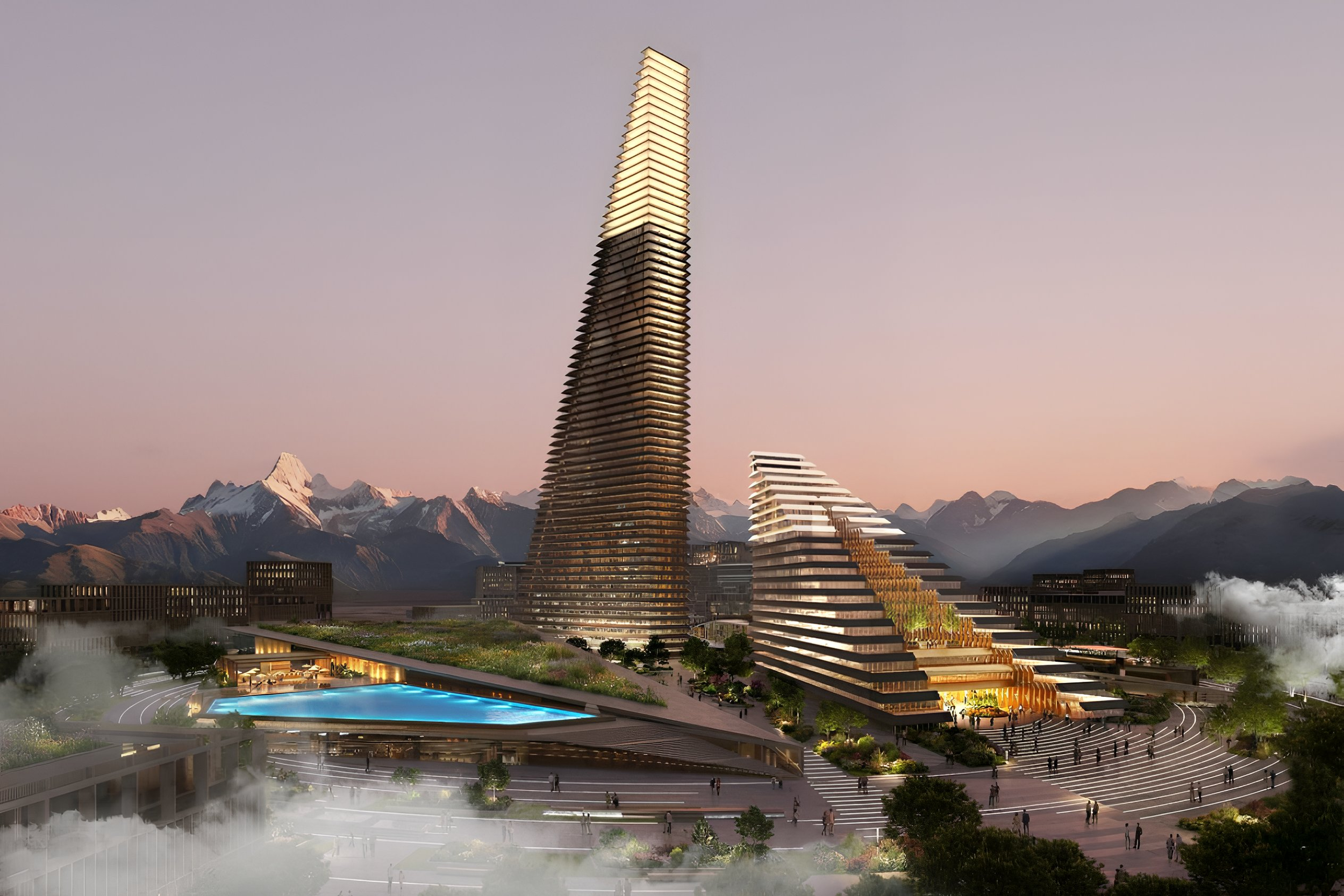
The New Alatau City, Kazakhstan
1) Why Kazakhstan Is Designing a City Around Law, Capital and Logistics
2) A City Before Its Time: Why Kazakhstan Is Betting on Alatau
3) Alatau City: Kazakhstan’s New Hub on the Middle Corridor
4) A city built for trade, law and technology
New cities are rarely built in the 21st century as a deliberate instrument of national economic strategy. Even more rarely are they designed alongside entirely new institutions, a distinct legal regime and a governance model intended to shape development for decades ahead. In Kazakhstan, that is precisely the role envisioned for Alatau City – a project positioned as a new pole of growth between Almaty and the major trade corridors of Eurasia. In conversation with Alatau City Authority CEO Alisher Abdykadyrov, we discuss why the country needs a new city, how it will function, and why the real ambition extends far beyond real estate into law, technology and capital.
Charlie Day: Your Excellency, welcome, and thank you for joining us. To begin, for an international audience, could you briefly explain how Kazakhstan’s political system is structured?
Alisher Abdykadyrov: Thank you, it’s a pleasure to be here. First of all, Kazakhstan follows a presidential system, but one with a fairly distinct administrative tradition. At the national level, power is distributed between the President, Parliament and Government, while territorially much depends on the institution of the akim (effectively a Governor or Executive Mayor) city or district. An akim combines political and executive authority. In that sense, it differs somewhat from the Anglo-Saxon model, where political leadership and city management are often separated. In Kazakhstan, territorial leadership is designed to ensure that national policy can be implemented coherently and quickly at local level.
Charlie Day: So akims (Mayor) are quite powerful figures in Kazakhstan?
Alisher Abdykadyrov: Yes, they carry significant executive authority. An akim (Mayor) is responsible not only for administration, but also for economic planning, territorial development, infrastructure and the delivery of state policy at local level. Whether it is a region, a city or a district, the akim effectively acts as the state’s representative in that territory and is directly accountable for how that territory develops.
Charlie Day: You previously served as Deputy Akim of Almaty. Kazakhstan is geographically immense yet relatively sparsely populated. How is that population distributed, and how do the country’s major cities differ in their roles?
Alisher Abdykadyrov: Kazakhstan has three major urban centres: Almaty, Astana and Shymkent. Because the country is geographically vast the ninth largest in the world urban concentration naturally follows major economic corridors, much as it does in Canada or Australia. Almaty remains the country’s financial, business and cultural centre. Astana, after becoming the capital in 1997, evolved into the main political and diplomatic platform of the country. Shymkent is increasingly important as a southern industrial and demographic centre.If one simplifies internationally, Astana plays a role similar to Beijing (London), Almaty resembles Shanghai in economic energy (Manchester), and Alatau is being designed as a future growth platform comparable in logic to Shenzhen (Milton Keynes or Canary Wharf, but it is important to emphasize that in Britain there is no complete analogue expressed in a separate jurisdiction within the country).
Charlie Day: So Alatau is the new city the government is building. Before we come to that in detail, why does Kazakhstan need a new city at all? It is located close to Almaty, but Almaty clearly faces geographical constraints.
Alisher Abdykadyrov: Almaty’s geography creates both its beauty and its limitation. The city sits against the mountain range and is effectively enclosed on three sides. This restricts long-term expansion and creates environmental pressures, particularly in terms of air circulation and transport load. The only natural direction for urban expansion is northward, which is precisely where Alatau is emerging. But what matters is that Alatau is not simply suburban expansion. We are not adding another residential district to Almaty. We are creating a separate economic platform, built around different institutions, a different regulatory environment and a different development logic.
Charlie Day: To give a sense of scale, the city covers around 88,000 hectares although I have also seen figures closer to 97,000. What is the correct way to understand its actual size?
Alisher Abdykadyrov: The city today covers approximately 88,000 hectares, while the surrounding economic development territory, including the expanded special economic zone, approaches 98,000 hectares (this is approximately two-thirds the size of Greater London, oran area larger than five Glasgow boroughs). This is large by any international standard. But scale alone is not the point. What matters is location: Alatau sits directly on one of Eurasia’s most important emerging corridors geographically positioned between China, Central Asia and Europe. That gives the project strategic depth from the outset.
Charlie Day: That location immediately raises the question of the Middle Corridor, which is increasingly discussed internationally. For those less familiar, what exactly does that mean in Kazakhstan’s context?
Alisher Abdykadyrov: The Middle Corridor is increasingly important because global trade is actively diversifying. For decades many routes were overdependent on a limited number of maritime and geopolitical channels. Today businesses want resilience, optionality and speed.Kazakhstan sits naturally at the centre of that adjustment.
Charlie Day: So in many ways this is a modern reinvention of the Silk Road. Around 3,000 kilometres of that wider Eurasian route pass through Kazakhstan, which means a substantial part of the larger Belt and Road geography runs through the country.
Alisher Abdykadyrov: Exactly. And it is worth remembering that the Belt and Road Initiative itself was first announced by President Xi Jinping here in Astana in 2013. So Kazakhstan has long occupied a central place in Eurasian connectivity thinking. What is changing now is that this geography is becoming economically more valuable again because land routes are regaining strategic importance.
Charlie Day: Historically, overland transport was once one of the cheapest ways to move goods across Eurasia, before maritime shipping became cheaper and more scalable. But with automation, electric freight and new logistics technologies, some experts argue that land transport may become highly competitive again. Does that create a major long-term opportunity for Kazakhstan?
Alisher Abdykadyrov: It certainly creates an opportunity. Logistics economics are changing. New freight technologies, more efficient rail and road links, digital tracking and electrification all alter the calculation. Kazakhstan’s advantage is that we are not trying to manufacture geography; we already have it. The question is whether we can now match that geography with the right institutions and infrastructure.
Charlie Day: One striking aspect of Alatau is that infrastructure appears to follow economic logic rather than the other way around. What comes first: transport, housing, industry, or institutions?
Alisher Abdykadyrov: Our sequencing is very deliberate: first economics, then urban density. A city cannot be sustained by architecture alone. It must first create economic demand. That means bringing in production, logistics, advanced industry, technology and jobs. Once that base appears, demand for housing, schools, services and urban life follows naturally. At this stage we are actively working with investors from the United States, China and South Korea. Today more than 40 major projects are already in our investment pipeline, with declared volume exceeding $3.5 billion. And some of those names are already globally recognisable. Among them are industrial projects involving Mars, PepsiCo, Korean food manufacturing, logistics operators, and negotiations in healthcare and advanced services. The sectors we prioritise are very clear: AI, logistics, advanced manufacturing and digital urban systems.
Charlie Day: Beyond manufacturing and logistics, you also seem to be placing significant emphasis on education and research. Is that because long-term competitiveness depends not only on industry, but on building an intellectual ecosystem around it?
Alisher Abdykadyrov: Exactly. Industrial investment can create momentum, but if a city is designed to remain competitive over decades, it must also generate talent, research capacity and innovation internally. That is why higher education is strategically important for us. We are already working with partners from the United States, China and South Korea, and one of the most important discussions concerns cooperation with KAIST – the Korea Advanced Institute of Science and Technology, one of Asia’s leading engineering and research universities. Cities that succeed technologically almost always develop around strong academic anchors. Universities do not simply educate people; they create long-term ecosystems where innovation becomes sustainable. Also, we have a landmark project - Iconic Towers. It’s planned as the tallest building in Almaty Region and southern Kazakhstan, reaching 272 metres, with over $800 million in private investment. It is being developed with a design concept by SOM – Skidmore, Owings & Merrill and to very stringent seismic standards, which is especially important in this region.
Charlie Day: One particularly interesting aspect of Alatau is that the city is divided into four zones, each designed around a different function. What was the thinking behind that structure?
Alisher Abdykadyrov: The principle is functional clarity. We do not want a city that grows chaotically. The Gate District is the business and financial gateway from Almaty. The Golden District is intended for education, medicine and knowledge-based functions. The Growing District is the industrial and logistics core. And the Green District is meant to provide quality of life, recreation and ecological balance. In other words, each district has a distinct economic role from the beginning. We are building an international hub. Kazakhstan sits between major economic powers: China to the east, Russia to the north, while also maintaining strong partnerships with Western countries. Although we are landlocked, that geography gives us strategic relevance. We believe the Middle Corridor, together with logistics and transit development, will become one of the core pillars not only of Alatau’s economy, but of Kazakhstan’s economy more broadly. So in that sense, Alatau is being designed as an international city – for business, for talent and for new entrepreneurs.
Charlie Day: And with regards to the economics, Alatau city is set to provide 3 to 5% of the annual revenue for the economy. The annual Kazakh GDP. How is it going to seek to do this? It's it's very exciting because I don't know, how would it compare to a market in Almaty itterms of contribution to the GDP? It must be very high.
Alisher Abdykadyrov: Almaty generates about one fifth of country's GDP. It's pretty big. It is the richest city in the Central Asia. We aim to get to about 40 to 50 billion USD GDP by 2050. It is very realistic as we see it, because what we are creating at the moment, is a totally new ecosystem. And its backed by the Constitution and constitutional law. There are not many examples of this kind of approach. But historically, major economic breakthroughs often started in cities Shenzhen in the 1980s, Dubai in the 1970s, Singapore after independence. In each case, the city became the place where a new economic model was first built.
Charlie Day: When you look at cities such as Dubai often presented as one of the most successful examples of rapid urban transformation what lessons have you taken from that experience?
Alisher Abdykadyrov: One lesson from global experience is very clear: many special economic zones fail because governance remains fragmented. Investors may have incentives, but they still face unclear authority, overlapping approvals and institutional friction. That is why the constitutional law matters so much. It creates legal clarity and defines Alatau as a separate development regime with dedicated powers for implementation through Alatau City Authority.
Charlie Day: And this legal architecture is partly inspired by internationally familiar legal systems?
Alisher Abdykadyrov: Because capital values predictability. English common law is widely understood by international investors, lenders and legal advisers. It provides a familiar language for contracts, dispute resolution and judicial interpretation. That is why Kazakhstan already used this approach in the Astana International Financial Centre, and why the broader conversation around Alatau’s legal architecture also places such importance on internationally trusted legal mechanisms. One particularly unusual feature is that Alatau is also being positioned as a regulatory sandbox that means certain technologies can be tested not in theory, but in real city conditions. Autonomous systems, drones, urban AI applications, advanced logistics these require urban environments designed from the beginning for experimentation, including low-altitude aviation its especially important because globally this industry is still searching for viable urban models. Most cities are too regulated, too dense or too structurally old to test such systems properly. Alatau has the advantage of being able to design for that future from day one. That is why our cooperation with Joby Aviation matters strategically. We are speaking about a broader low-altitude economy: not only drones, but cargo systems, urban air mobility, monitoring technologies and eventually air taxis.
Charlie Day: Do you think overregulation is beginning to slow innovation globally?
Alisher Abdykadyrov: In many cases, yes. Not only in the West. New technologies often emerge faster than institutions can adapt. And if regulation is too rigid, innovation is delayed or simply moves elsewhere. The challenge for policymakers is to create safe but flexible frameworks. That is exactly why a project such as Alatau matters: it gives us an opportunity to build those frameworks in parallel with technological change.
Charlie Day: In practical terms for any serious business environment, disputes inevitably arise. Investors need arbitration, legal predictability and strong courts. So what would you say are the main pillars attracting investment into Alatau?
Alisher Abdykadyrov: The pillars are straightforward: legal certainty, geography, connectivity and market access. Investors need to know that rules are stable, permissions are clear and contracts can be protected. They also need to see a location that connects them to real markets and real logistics routes. Alatau offers both. It is tied to the Middle Corridor, to the Almaty agglomeration and to a broader Central Asian growth space. And unlike many projects that promise incentives without execution capacity, Alatau is being built around a dedicated development authority and a phased infrastructure plan.
Charlie Day: In Britain, when we study the Industrial Revolution, one of the recurring lessons is that cities often grew around production: factories came first, employment followed, and communities formed around that economic base. Is there a similar logic in how you are approaching Alatau?
Alisher Abdykadyrov: Very much so. Durable cities rarely emerge from housing alone. They emerge where there is first an economic reason for people to come. That is why our sequencing begins with production, logistics, industry and jobs. If that economic base is real, people follow and when people follow, schools, housing, healthcare and urban life become viable in a sustainable way.
Charlie Day: And beyond industry, there is also the question of quality of life. What kinds of recreational culture and sport matter most in Kazakhstan today?
Alisher Abdykadyrov: Kazakhstan is a country with a very broad sporting culture. Football, boxing and wrestling are especially important, but winter sports are significant as well, including figure skating and hockey. In any new city, that matters because quality of life is not a decorative issue. If you want families, students and skilled professionals to choose a place over the long term, you need recreation, sport and public life not only offices and factories.
Charlie Day: Are you expecting talent to relocate primarily from Almaty, or do you see Alatau attracting people from beyond Kazakhstan as well?
Alisher Abdykadyrov: Both. Naturally, Almaty will create a spillover effect because it is already a large international city with talent, capital and institutions on Alatau’s doorstep. But the ambition is broader. We expect Alatau to attract specialists and entrepreneurs not only from Kazakhstan, but from across Central Asia and beyond, particularly if the legal and business environment proves competitive.
Charlie Day: It is striking how many ambitious steps Kazakhstan is taking institutionally. Yet in much of the West, Central Asia still receives relatively limited attention compared with the Middle East or Europe. Why do you think international investors should be paying closer attention to Kazakhstan and to Central Asia now?
Alisher Abdykadyrov: Because the region is no longer peripheral to the main flows of trade, capital and technology. Central Asia is becoming more important precisely because global business is re-evaluating geography. Kazakhstan offers scale, macroeconomic stability, institutional ambition and a central position in Eurasian transit. For investors, that combination is increasingly difficult to ignore.
Charlie Day: So in many ways Kazakhstan presents itself as a space of political and economic stability and that is closely tied to its multi-vector foreign policy.
Alisher Abdykadyrov: Yes. Stability is not simply a slogan. It is one of the country’s core economic assets. In a world of growing fragmentation, investors are naturally more attentive to jurisdictions that can offer predictable policy, balanced external relations and long-term development planning.
Charlie Day: If we look twenty years ahead, what would success ultimately mean?
Alisher Abdykadyrov: For me, success ultimately means one thing: self-sufficiency.If the city becomes fiscally sustainable, if private capital scales without state dependence, and if investors continue arriving because the ecosystem works then the model has succeeded.
Charlie Day: And personally, after holding several major public roles, what makes this position distinct?
Alisher Abdykadyrov: What makes this role extraordinary is that one rarely has the chance to build institutions and territory at the same time. This is not simply city construction. It is institutional design at urban scale and opportunities of that kind are exceptionally rare. And that is why the responsibility is both difficult and deeply meaningful.