
Kazakhstan’s New Constitution: A Nation Reshaped
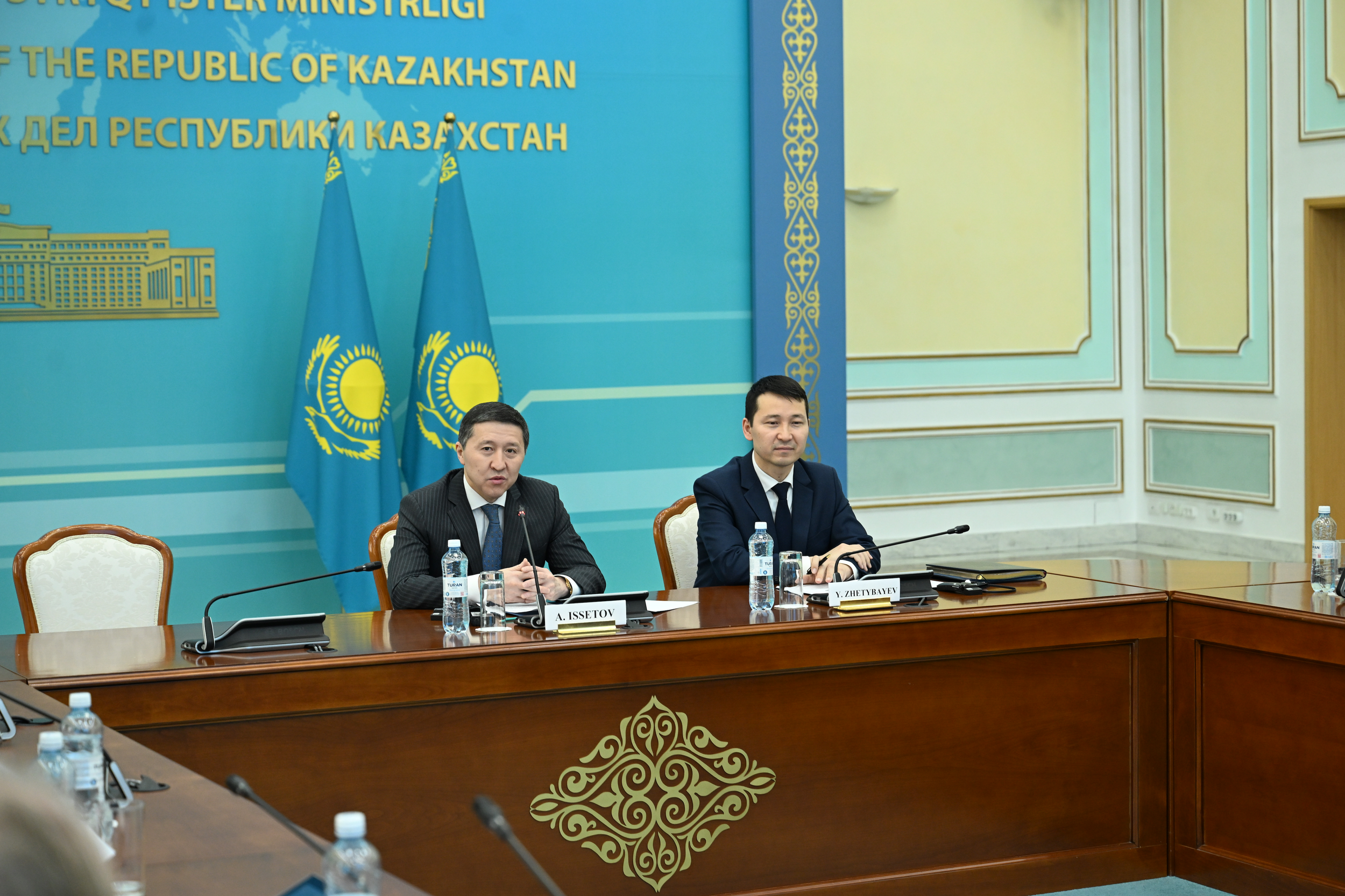
On 15th March 2026, Kazakhstan voted on the most comprehensive revision to its foundational law since independence. The result was unambiguous: election figures show that 87 percent of voters approved a new constitution, with a turnout of 73 percent — the highest recorded for any national vote since 2019. President Kassym-Jomart Tokayev signed the document into law two days later. It takes effect on 1st July 2026, when the existing parliament will be dissolved and elections to a new legislature will follow.
The scale of what was approved is striking. Roughly 84 percent of the constitutional text has been rewritten, introducing 95 new articles. What began as a proposal for parliamentary reform in Tokayev’s September 2025 State of the Nation address had, within months, expanded into a wholesale reimagining of the country’s governance architecture.
From Reform to Revolution
The original plan was modest by comparison. In his 2025 address, Tokayev proposed abolishing Kazakhstan’s bicameral legislature — the Mäjilis and the Senate — in favour of a single chamber, with a national referendum pencilled in for 2027. A 33-member Working Group on Parliamentary Reform was duly established in October 2025 and began gathering proposals from parties, legal scholars, and civil society groups. By the end of six months of deliberations, it had received some 1,500 submissions — and the scope of the proposed changes had grown considerably.
In January 2026, Tokayev signalled the shift in ambition plainly: “We intend to take a step comparable to adopting a new constitution.” A presidential decree in mid-February scheduled the vote for 15th March 2026. The draft was published on 12th February, giving voters just over a month to review a document that touches nearly every aspect of how their country is governed.
What the Constitution Changes
The most visible institutional change is the replacement of the bicameral parliament with a unicameral body called the Kurultai — a Kazakh word meaning “assembly.” The new chamber will have 145 members elected for five-year terms under proportional representation, somewhat larger than the outgoing Mäjilis with its 98 seats. The Senate, which served as a revising chamber, will be dissolved entirely.
Alongside the Kurultai, a new advisory body — the Halyk Kenesi, or People’s Council — will be established. Appointed by the president and intended to reflect Kazakhstan’s ethnic and religious diversity, it is a consultative rather than legislative institution. Five new constitutional laws, covering the Presidency, the Kurultai, the Halyk Kenesi, the status of the capital, and the country’s administrative-territorial structure, will be submitted to Parliament to implement the new framework.
The office of vice president, which existed briefly between 1991 and 1996 before being abolished under Nursultan Nazarbayev, will be restored. The President will appoint the Vice President subject to Kurultai approval. The President will also gain the authority to nominate members of the Supreme Court, the Constitutional Court, the Supreme Audit Chamber, and the Central Election Commission — all subject to parliamentary confirmation. Future constitutional amendments may only be approved through a referendum rather than by parliamentary vote alone.
The constitution also introduces new social provisions. Marriage is defined as a union between a man and a woman, codifying in the basic law what had previously existed only in statute. First-time constitutional protections for digital rights, including data privacy and access to digital infrastructure, are included — a recognition of the economy’s advancing technological direction. New social guarantees relating to housing and healthcare will also be enshrined.
President Tokayev’s Vision
President Tokayev has been candid about his ambitions for the new country’s new constitution, which he has described as the centrepiece of his “New Kazakhstan” programme — a sustained effort since 2022 to move the country beyond what he calls the “super-presidential” model of the Nazarbayev era. Writing in The National Interest on 30th March, Tokayev framed the new constitution in explicitly generational terms, arguing that if the 1995 Constitution was about independence and survival, then the 2026 constitution is about maturity, renewal, and betting big on the future. The article, titled “A New Constitution for Just, Strong, and Prosperous Kazakhstan,” set out his view that the reforms are designed to lay the groundwork for a stronger state — “one that honours its history while advancing justice, technological progress, economic openness, and responsible global” engagement.
That framing aligns with what Tokayev told audiences at the signing ceremony on 17 March, where he described the document as a “strategic mandate of trust” and “a foundation for a new social contract.” He announced plans for an administrative amnesty — the first in Kazakhstan’s history — and indicated a possible criminal amnesty for minor offences. He has stated publicly that his term ends in 2029 and that he does not plan to seek re-election.
Power and Succession
The restoration of the Vice Presidency has drawn the most analytical attention. Kazakhstan has lacked a formal constitutional succession mechanism, and the new office is understood to address that gap directly. The President appoints the Vice President, who is expected to play a significant role in the continuity of governance.
The government presents the constitutional changes as a rebalancing of institutional power — a move toward what Tokayev describes as a system of “strong President, influential Parliament, and accountable government.” The expanded role of the Kurultai in confirming presidential appointments is cited as evidence of that intent. At the same time, the provision limiting future amendments to referendum-only approval, concentrates control over constitutional change in a process that the executive initiates.
How these provisions interact in practice will depend on how the new institutions function once the new constitution enters into force. That process begins on 1 July, when the current Parliament is dissolved and Kazakhstan enters the next phase of its political transition.
A Milestone…
Kazakhstan’s new constitutional model is presented as modernisation, not a wholesale departure from the existing system. Whether the changes deliver on the government’s stated objectives of greater accountability and institutional balance, or whether they primarily entrench existing concentrations of power in new constitutional clothing, is a question that will be answered over years, not months.
What is already clear, is that Kazakhstan has undertaken its most extensive act of constitutional self-revision since 1995 — one that will define the framework of governance for the country well into the future. March 15 has been designated as ‘Constitution Day’. The document that gave it that name will now be the basic law of the land, and its impact on Kazakhstan as a nation will be defined over time.